Reproducible examples
Comic API examples you can inspect before integrating.
A Comic API example should show the request, lifecycle, structured response, and final visual output—not only a generated image.
The request below creates new comic assets. It does not query existing comic books, issues, characters, or publisher records.
Run this requestAccount, API key, usage, and billing open on LlamaGen.AI.
Direct answer
The decision this page is for.
Last verified:
A usable Comic API example shows the authenticated POST, the generation ID, the QUEUED-to-PROCESSED lifecycle, structured page and panel JSON, and a visual result. An image alone is not enough to design a product integration.
Verifiable request
Four-panel rainy-city request
curl -X POST \
  https://api.llamagen.ai/v1/comics/generations \
  -H "Authorization: Bearer $LLAMAGEN_API_KEY" \
  -H "Content-Type: application/json" \
  -d '{
  "prompt": "A bicycle courier crosses a flooded city to deliver a handwritten letter.",
  "fixPanelNum": 4,
  "size": "1024x1024",
  "language": "English"
}'
Structured response
State your application can route
{
  "id": "gen_abc123",
  "status": "PROCESSED",
  "comics": [
    {
      "page": 0,
      "panels": [
        {
          "panel": 0,
          "caption": "The courier reaches the lit doorway.",
          "assetUrl": "https://cdn.llamagen.ai/comics/panel-1.webp"
        }
      ]
    }
  ]
}
Output evidence
Inspect the visual result and the machine-readable state.
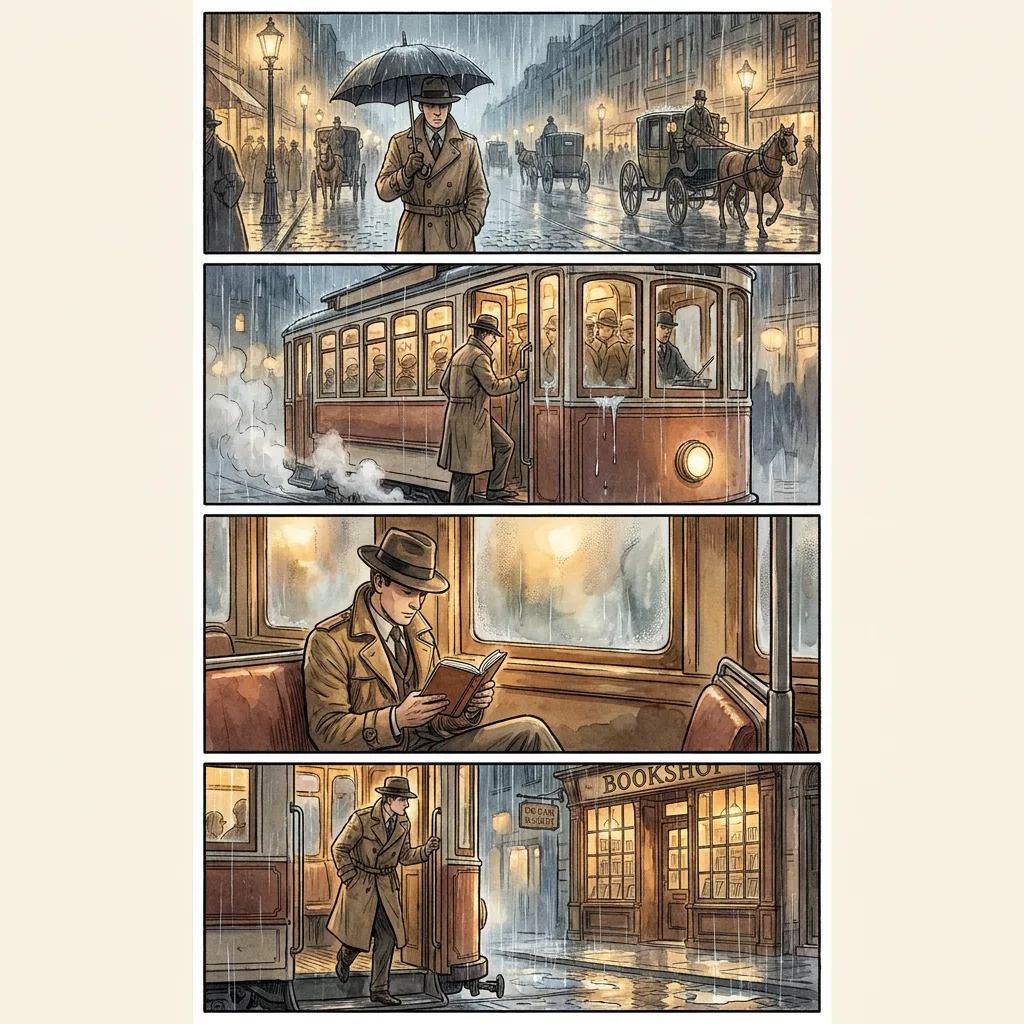
The visual is evidence of the output category. The JSON lets an application correlate the generation, render a preview, store assets, and continue the workflow.
Capability and boundary facts
Facts an integration can verify.
Last verified:
- Endpoint
- POST /v1/comics/generations
- Authentication
- Bearer API key
- Lifecycle
- QUEUED → PROCESSING → PROCESSED or FAILED
- Delivery
- Poll by generation ID or use a callback URL
- Output structure
- Page, panels, captions, and asset URLs
Good fit
Use it when
- Validating request and response shape
- Designing preview and approval screens
- Testing generation-state handling
Wrong fit
Do not use it for
- Benchmarking latency from a static example
- Assuming every prompt produces the same composition
- Using placeholder asset URLs as permanent files
Production limits
Plan for the boundaries.
- 01Generation is asynchronous; production interfaces must handle processing and failure states.
- 02Outputs should be reviewed against product, brand, safety, and print requirements before delivery.
- 03You must have the rights to prompts, photos, scripts, and reference assets submitted to the API.
Authoritative sources
Questions
Direct answers before you integrate.
01What should a Comic API example include?
02Can I copy the example asset URLs into production?
03Does this example query existing comic books?
Next step
Move from evidence to a real API request.
LlamaGen provides the playground, API key, usage, billing, and authoritative service documentation.
Run this request