Story transformation
Turn a story or script into structured comic pages.
The story-to-comic workflow accepts prompt text or a signed story file, then combines it with pagination, roles, locations, and language settings.
The API creates a visual draft and structured assets; it does not replace editorial adaptation, continuity review, or rights clearance.
Convert a story exampleAccount, API key, usage, and billing open on LlamaGen.AI.
Direct answer
The decision this page is for.
Last verified:
Story-to-comic accepts prompt text or a signed script URL, plus pagination, roles, locations, and language. It returns a visual draft your editors can review. It does not replace adaptation, continuity, or rights clearance.
Verifiable request
Story brief with recurring context
curl -X POST \
  https://api.llamagen.ai/v1/comics/generations \
  -H "Authorization: Bearer $LLAMAGEN_API_KEY" \
  -H "Content-Type: application/json" \
  -d '{
  "promptUrl": "https://example.com/signed/story-brief.pdf",
  "pagination": {
    "totalPages": 3,
    "panelsPerPage": 4
  },
  "comicRoles": [
    {
      "name": "Ari",
      "image": "https://example.com/ari.webp"
    }
  ],
  "comicLocations": [
    {
      "name": "Archive",
      "description": "Brutalist underground library"
    }
  ],
  "language": "English"
}'
Structured response
State your application can route
{
  "id": "gen_abc123",
  "status": "PROCESSED",
  "comics": [
    {
      "page": 0,
      "panels": [
        {
          "panel": 0,
          "caption": "Ari discovers the sealed archive map.",
          "assetUrl": "https://cdn.llamagen.ai/comics/panel-1.webp"
        }
      ]
    }
  ]
}
Source visualization
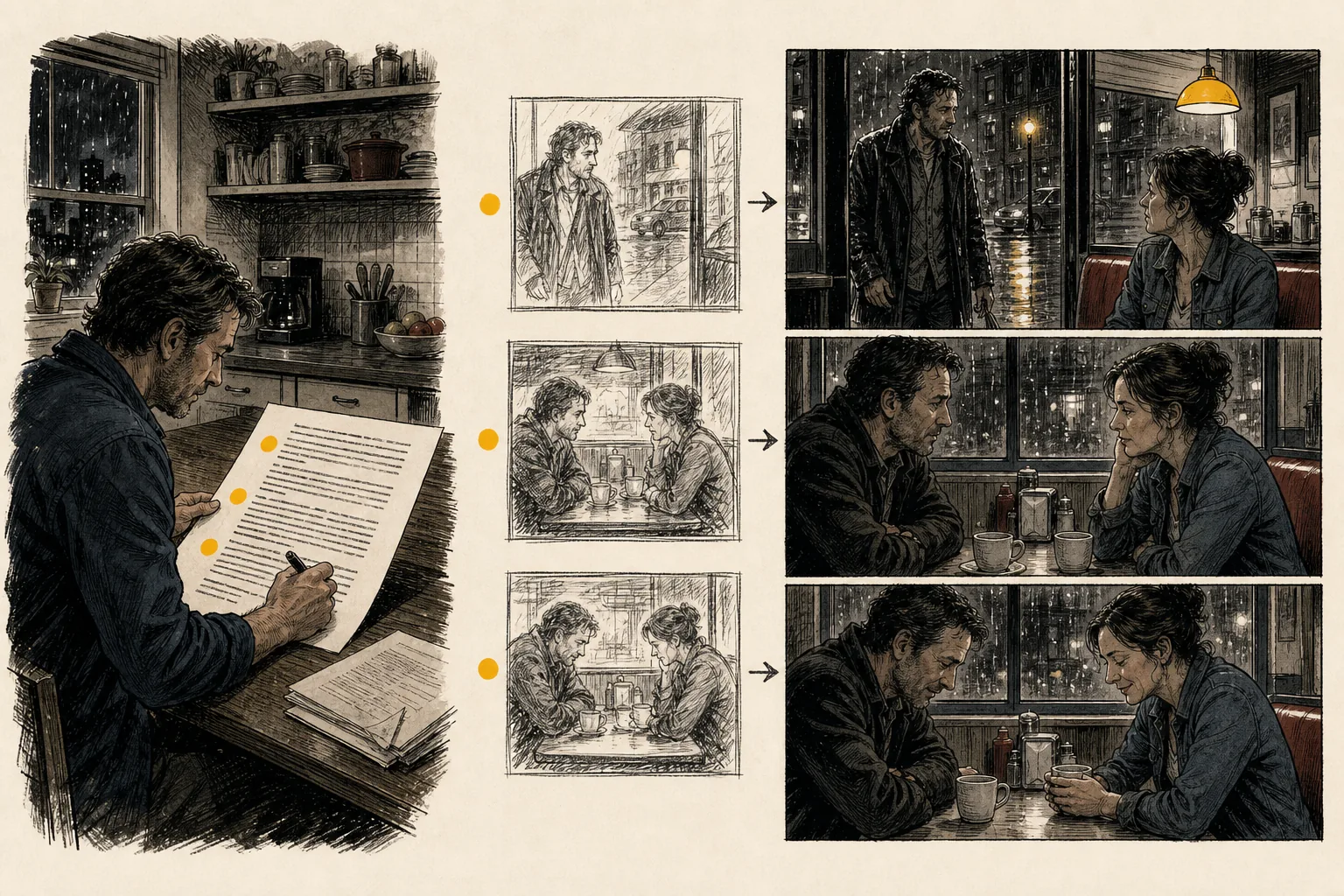
Turn narrative structure into visual beats.
The scene connects a story brief, recurring context, page planning, and an editor-reviewed comic draft.
Capability and boundary facts
Facts an integration can verify.
Last verified:
- Endpoint
- POST /v1/comics/generations
- Authentication
- Bearer API key
- Lifecycle
- QUEUED → PROCESSING → PROCESSED or FAILED
- Delivery
- Poll by generation ID or use a callback URL
- Story inputs
- Prompt text or signed promptUrl plus references
Good fit
Use it when
- Script visualization
- Editorial storyboarding
- Narrative product features
Wrong fit
Do not use it for
- Final editorial approval
- Rights clearance
- Guaranteed verbatim preservation of every script line
Production limits
Plan for the boundaries.
- 01Signed file URLs must remain accessible for the request lifecycle.
- 02Long scripts should be scoped into clear pages, scenes, and characters before generation.
- 03Generation is asynchronous; production interfaces must handle processing and failure states.
- 04Outputs should be reviewed against product, brand, safety, and print requirements before delivery.
- 05You must have the rights to prompts, photos, scripts, and reference assets submitted to the API.
Authoritative sources
Questions
Direct answers before you integrate.
01Can I send a PDF or Word script?
02Will every line of the script appear as lettering?
03When should I use story-to-comic instead of a short prompt?
Next step
Move from evidence to a real API request.
LlamaGen provides the playground, API key, usage, billing, and authoritative service documentation.
Convert a story example