Interface comparison
A comic API is not a generic image endpoint.
A generic image API returns pixels. A comic API returns story structure your software can route: pages, panels, captions, asset URLs, and a generation ID with explicit states.
You can stitch panels from any image model, but then your product owns layout, caption association, continuity, retries, and tracking. The Comic API accepts those concerns in the request and response.
Inspect a comic jobAccount, API key, usage, and billing open on LlamaGen.AI.
Direct answer
The decision this page is for.
Last verified:
A generic image API returns pixels. A comic API returns a story structure your software can route: pages, panels, captions, asset URLs, and a generation ID with explicit states. Use an image model for one-shot art; use a comic API when preview, approval, and fulfillment depend on panel structure.
Verifiable request
One job returns the full strip
curl -X POST \
  https://api.llamagen.ai/v1/comics/generations \
  -H "Authorization: Bearer $LLAMAGEN_API_KEY" \
  -H "Content-Type: application/json" \
  -d '{
  "prompt": "Four-panel mystery: a detective finds a missing key behind a library painting.",
  "fixPanelNum": 4,
  "size": "1536x1024",
  "language": "English"
}'
Structured response
State your application can route
{
  "id": "gen_abc123",
  "status": "PROCESSED",
  "comics": [
    {
      "page": 0,
      "panels": [
        {
          "panel": 0,
          "caption": "The key was taped to the frame.",
          "assetUrl": "https://cdn.llamagen.ai/comics/panel-1.webp"
        }
      ]
    }
  ]
}
Output evidence
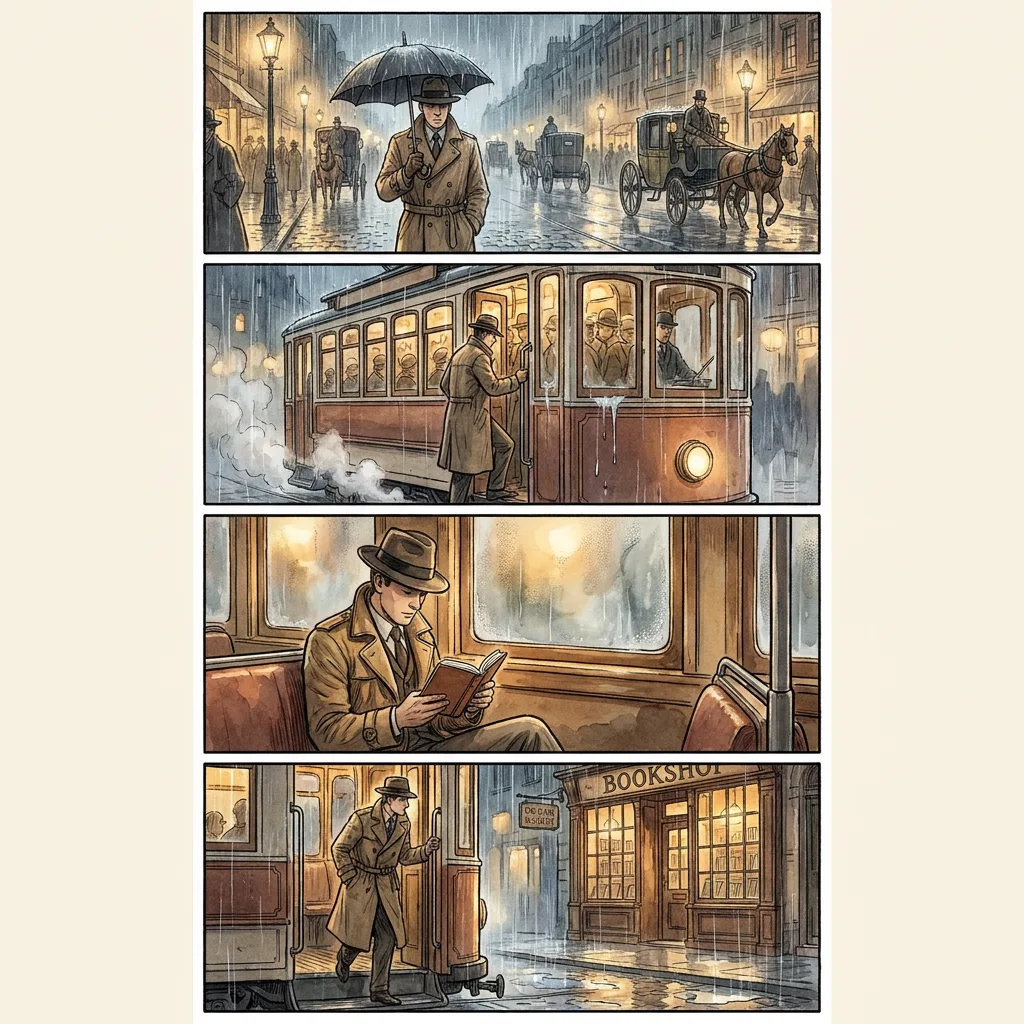
Inspect the visual result and the machine-readable state.
The visual is evidence of the output category. The JSON lets an application correlate the generation, render a preview, store assets, and continue the workflow.
Choose by the object your next system needs
Panel structure is the product difference.
| Need | Comic generation API | Generic image API |
|---|---|---|
| Primary output | Pages, panels, captions, and asset URLs | One image, sometimes several variants |
| Story control | Panel count or pagination in the request | Usually one composition per request |
| Continuity | Named roles, references, and locations | Prompt text or a seed |
| Job contract | Generation ID plus explicit lifecycle states | Synchronous file or an opaque prediction ID |
| Best fit | Preview, approval, publishing, fulfillment | Concept art and single illustrations |
Capability and boundary facts
Facts an integration can verify.
Last verified:
- Comic API output
- Pages, panels, captions, asset URLs, generation ID, status
- Image API output
- Usually one raster file or a list of image URLs
- Continuity input
- Named roles and reference images on the same job
- Application lifecycle
- QUEUED, PROCESSING, PROCESSED, FAILED, CANCELLED
Good fit
Use it when
- Products that preview and approve multi-panel stories
- Fulfillment flows that correlate a job ID to an order
- Agents that must observe generation state
Wrong fit
Do not use it for
- One-shot hero images with no panel structure
- Assuming pixel-identical reprints of a reference photo
- Replacing your own layout engine when you already have one
Production limits
Plan for the boundaries.
- 01A comic API still produces generated art; it does not make lettering, anatomy, or continuity deterministic.
- 02If you only need a single illustration, a generic image endpoint may be the smaller integration.
- 03Generation is asynchronous; production interfaces must handle processing and failure states.
- 04Outputs should be reviewed against product, brand, safety, and print requirements before delivery.
- 05You must have the rights to prompts, photos, scripts, and reference assets submitted to the API.
Authoritative sources
Questions
Direct answers before you integrate.
01Why not generate each panel with a generic image model?
02Does a comic API guarantee the same character in every panel?
03Which one belongs in an ecommerce or agent workflow?
Next step
Move from evidence to a real API request.
LlamaGen provides the playground, API key, usage, billing, and authoritative service documentation.
Inspect a comic job