Pet personalization workflow
Turn a pet photo into a comic product with a clear promise.
A pet-to-comic product converts consented pet photos, the animal's name and traits, and a chosen story premise into a bounded comic format for digital or physical delivery.
The strongest product is not an unrestricted prompt box. It offers a small set of understandable story templates, formats, review rules, and delivery choices.
Prototype a pet comicAccount, API key, usage, and billing open on LlamaGen.AI.
Direct answer
The decision this page is for.
Last verified:
Pet-to-comic products work when the buyer picks a story template and supplies clear photos plus name, markings, and a visible accessory. Continuity review still happens before you deliver.
Verifiable request
Pet adventure product brief
{
  "prompt": "Create a four-panel neighborhood mystery starring Miso, an orange tabby who is curious and dramatic. Preserve the white paws and green collar across panels.",
  "images": [
    "https://shop.example.com/signed/miso-front.webp",
    "https://shop.example.com/signed/miso-side.webp"
  ],
  "fixPanelNum": 4,
  "size": "1536x1024",
  "language": "English"
}
Structured response
State your application can route
{
  "id": "gen_abc123",
  "status": "PROCESSED",
  "comics": [
    {
      "page": 0,
      "panels": [
        {
          "panel": 0,
          "caption": "Miso discovers the missing garden glove.",
          "assetUrl": "https://cdn.llamagen.ai/comics/panel-1.webp"
        }
      ]
    }
  ]
}
Customer scenario
Carry a pet's recognizable traits into a complete story.
The transformation highlights reference photos, named physical traits, recurring character continuity, approval, and delivery.
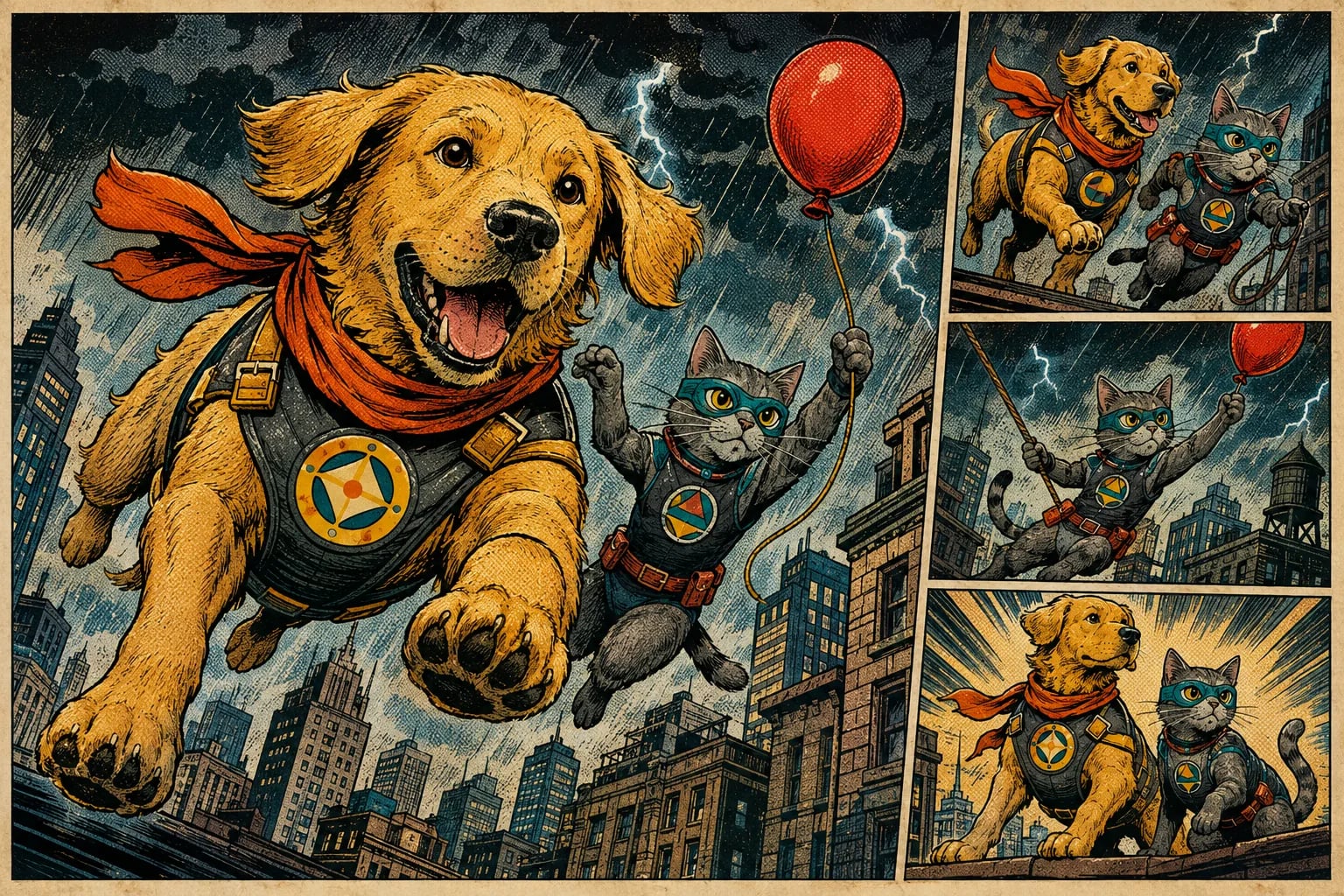
Product configuration
Use templates to make the creative input easier to buy.
A small set of story premises reduces customer uncertainty, creates more consistent briefs, and makes the review promise easier for the merchant to explain.
- 01Customer
Choose a story
Offer clear premises such as neighborhood mystery, space mission, birthday rescue, or memorial journey.
- 02Customer
Describe the pet
Collect name, traits, coat and markings, a visible accessory, and one or two useful photos.
- 03Comics API
Generate the comic
Attach the pet context to a fixed panel count and product-specific size.
- 04Merchant
Check continuity
Review markings, accessory, species, captions, and the pet's name across the full page.
- 05Store
Approve delivery
Release the final digital download or send the approved composition to print export.
Capability and boundary facts
Facts an integration can verify.
Last verified:
- Reference set
- One clear front image plus an optional side or markings image
- Character context
- Name, species, coat, markings, accessory, and personality
- Product choice
- Story template, format, and delivery type
- Continuity review
- Markings, accessories, scale, and name across panels
- Delivery
- Approved digital file or print export
Good fit
Use it when
- Pet memorial and celebration gifts
- Simple personalization flows with strong visual input
- Digital downloads, posters, and short comic books
Wrong fit
Do not use it for
- Exact veterinary or breed identification
- Guaranteeing photographic likeness
- Open-ended style imitation of a living artist
Production limits
Plan for the boundaries.
- 01Reference images improve context but do not guarantee exact markings or proportions in every panel.
- 02Ask for only the images needed to recognize the pet and delete rejected uploads on a stated schedule.
- 03Use selective panel regeneration when one panel breaks continuity instead of restarting every approved panel.
- 04Generation is asynchronous; production interfaces must handle processing and failure states.
- 05Outputs should be reviewed against product, brand, safety, and print requirements before delivery.
- 06You must have the rights to prompts, photos, scripts, and reference assets submitted to the API.
Questions
Direct answers before you integrate.
01Why use story templates instead of a blank prompt?
02How many photos should I ask for?
03Can I guarantee breed-accurate anatomy?
Next step
Move from evidence to a real API request.
LlamaGen provides the playground, API key, usage, billing, and authoritative service documentation.
Prototype a pet comic